


By Makutu Manneh
The Central Bank of The Gambia (CBG) has maintained its monetary policy rate at 14 percent while revising downward its economic growth forecast for 2026, citing moderating domestic demand and persistent global economic uncertainties.
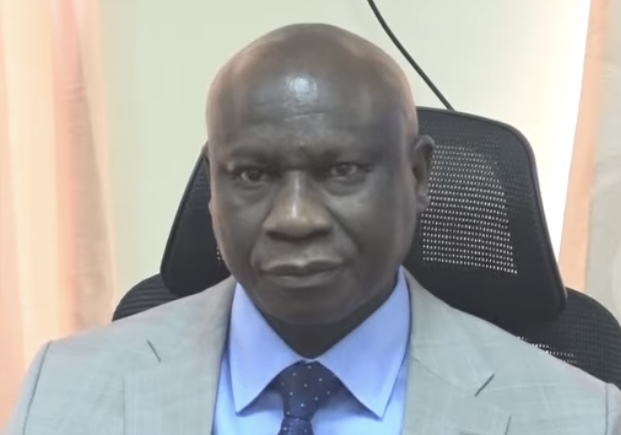
The decision was announced by Central Bank Governor Buah Saidy during a Monetary Policy Committee (MPC) press briefing on Thursday, November 26, 2026, following a two-day meeting to assess global and domestic economic developments and the near-term economic outlook.
Governor Saidy said the bank now projects real Gross Domestic Product (GDP) growth of 5.5 percent in 2026, supported by stronger activity in the tourism, construction, and manufacturing sectors, alongside the continued implementation of targeted public investment projects.
The latest forecast represents a downward revision of 0.3 percentage points from the Bank’s August projection. Governor Saidy attributed the adjustment primarily to moderating domestic demand associated with ongoing fiscal consolidation efforts and a slowdown in private sector activity.
“The growth outlook, however, remains subject to significant downside risks arising from the dragging war in the Middle East and its implications for energy and food prices, climate-related shocks, and declining concessional financing. This could dampen growth prospects in 2026,” Governor Saidy stated.
On fiscal developments, the Governor said preliminary estimates indicate an improvement in the government’s fiscal position during the first nine months of 2026.
The overall fiscal deficit, including grants, narrowed to D5.2 billion, equivalent to 2.3 percent of GDP, compared with D8.1 billion, or 4.1 percent of GDP, during the corresponding period in 2025.
Similarly, the fiscal deficit excluding grants declined to D15.2 billion, representing 6.8 percent of GDP, from D16.8 billion, or 8.4 percent of GDP, a year earlier.
Despite the improvement in the fiscal position, domestic debt continued to rise. Governor Saidy disclosed that the stock of domestic debt increased to D55.6 billion, equivalent to 24.8 percent of GDP, at the end of September 2026, up from D52 billion, or 23.2 percent of GDP, at the end of 2025.
He further revealed that short-term government securities with maturities of one year or less accounted for 53.9 percent of the domestic debt portfolio, highlighting the government’s exposure to refinancing risks.
The Central Bank’s decision to maintain its benchmark interest rate reflects a cautious monetary policy stance amid a weaker growth outlook and lingering uncertainties surrounding global energy and food prices.
For households and businesses, the unchanged policy rate suggests that borrowing costs could remain elevated in the near term, potentially constraining access to credit and private sector investment.
Meanwhile, although the narrowing fiscal deficit points to an improvement in public finances, the rising stock of domestic debt and its significant short-term component are likely to remain key challenges for the government as it enters 2027.
Comments are closed.