

Agriculture Minister Reports Stable Crop Production, Citing Weather-Related Declines in Groundnut and Rice Yields

By Fatou Sillah
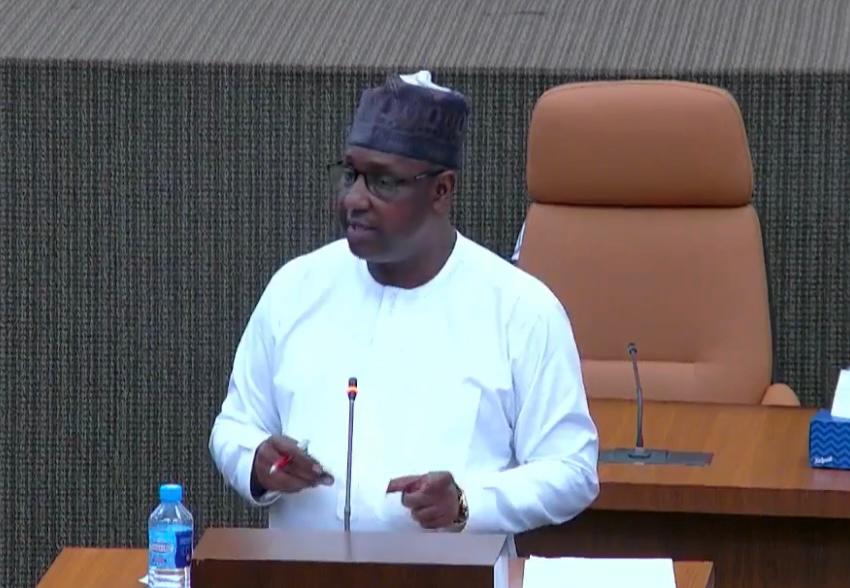
Gambia’s Minister of Agriculture, Livestock, and Food Security, Demba Sabally, told lawmakers this week that the country’s overall agricultural output remained steady last year, with the only notable declines recorded in groundnut and rice production—losses he attributed to extreme weather events.
Addressing the National Assembly, Mr. Sabally said groundnut yields fell following a three-week drought, while heavy flooding in parts of the Central River Region South and Upper River Region submerged rice fields, leading to reduced harvests.
“Last year, the only crops that had lower yield were groundnut due to a three-week drought spell and rice due to floods in CRR South and URR, where the fields were submerged,” Mr. Sabally said.
Despite these setbacks, the minister emphasized that the government continues to invest in programs intended to strengthen crop resilience and support smallholder farmers. He highlighted training on good agricultural practices, improved certified seeds, and subsidized inputs that he said were essential to sustaining production levels.
“The Ministry of Agriculture, Livestock, and Food Security continues to provide vital services to vulnerable farmers in order to increase production and productivity, including capacity building for farmers on good agricultural practices through the extension delivery system of the Department of Agriculture, whose regional offices are equipped with extension staff spread across the districts and villages,” he said.
According to Mr. Sabally, farmers now have broader access to climate-smart seeds—including groundnut, rice, maize, cowpea, and vegetable varieties—that mature faster and promise higher yields. The government has also expanded subsidized plowing services, discounted fertilizer distribution, and the supply of herbicides and pesticides aimed at mitigating longstanding challenges related to land preparation, soil infertility, flooding, pests, and crop diseases.
“This is groundnut, rice, maize, cowpea, and vegetable seeds to farmers that are climate smart; for example, they mature in shorter durations, and they are high-yielding,” he said. “Also provided free or highly subsidized plowing services, the government also provided fertilizer at a highly discounted rate and also provided agrochemicals, including herbicides and pesticides, all to address the perennial challenge of land preparation, soil infertility, flooding, and pest and disease occurrence,” he said.
He described these interventions as part of a wider strategy to strengthen the country’s food security amid increasingly unpredictable weather patterns linked to climate change.
Preliminary data, he added, suggest that this season’s harvest will outperform last year’s. “And this year’s yield is expected to be much higher as per the preliminary data that we got from the Department of Planning,” he told lawmakers.