

NEA Chief Outlines $2.5 Million Project to Boost Climate Resilience in Greater Banjul Area

By Seedy Jobe
The National Environment Agency, in partnership with the United Nations Environment Programme, has launched a $2.5 million project aimed at strengthening climate resilience in Banjul and the Greater Banjul Area through nature-based solutions and greener urban development.
The initiative, officially titled Climate Resilience Banjul: Enhancing Urban Resilience in the Greater Banjul Area, was launched on September 8 and is funded by the Global Environment Facility.
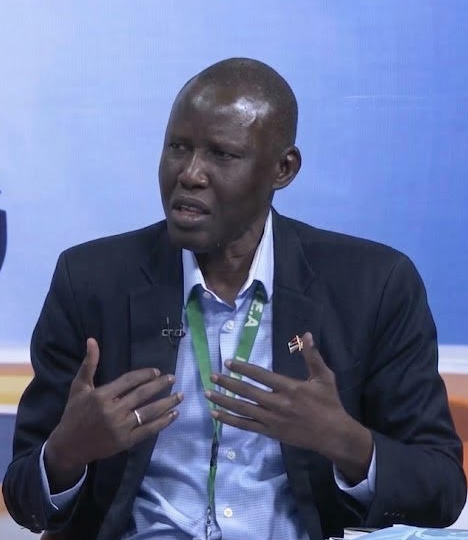
In an exclusive interview with QTV, Dr. Dawda Badjie, executive director of the National Environment Agency, outlined the project’s objectives, planned interventions, and the years-long process that led to its approval.
Dr. Badjie said climate change is a growing concern worldwide and that The Gambia is no exception. But he said one area that has received insufficient attention in the country’s response to climate change is the need to build more resilient cities.
Cities, he explained, tend to generate and retain significant amounts of heat, a difference he said can be noticeable when traveling from urban areas to rural communities. As a result, he said, The Gambia must rethink how its cities are designed and incorporate more natural spaces into urban development.
The project, he said, seeks to change the way cities are planned by making them more environmentally friendly and better able to withstand the effects of climate change.
Responding to concerns about how the project could help low-lying Banjul cope with flooding and rising sea levels, Dr. Badjie said policymakers and developers often turn to concrete infrastructure when nature itself can provide effective solutions.
“Nature brings a lot of solutions,” he said.
Dr. Badjie said nature-based approaches to environmental management are increasingly gaining attention as alternatives or complements to conventional infrastructure. He expressed concern that extensive concretization, including within residential compounds, has eliminated many of the natural areas where rainwater once drained into the ground.
Under existing regulations, buildings should occupy no more than 60 percent of a plot, he said. But many developments exceed that threshold, leaving little or no exposed ground to absorb rainwater.
Banjul, Dr. Badjie said, contains areas that could be restored or developed as natural drainage zones, allowing floodwater to seep into the ground instead of flowing back into residential communities.
He pointed to Banjul’s colonial-era landscape, saying the city experienced heavier rainfall in the past without suffering flooding on the scale seen today because natural drainage areas were available to absorb excess water.
Many of those natural sinks, he said, have since been covered with concrete, meaning even relatively modest rainfall can overwhelm communities because the water has nowhere to drain.
Dr. Badjie identified Bond Road as one of the project’s key areas of focus. He said that after becoming NEA executive director in 2022, he wrote to the minister responsible for lands, copying the country’s area councils, to state that the agency would not approve further development around Bond Road because growing industrial activity was threatening important natural drainage areas.
The plan, he said, is to transform the Bond Road area into a more natural environment that could also serve as a recreational space, providing residents with an alternative to the beach.
Urban parks and other green spaces, he added, can help regulate heat generated within cities while providing recreational areas for residents. He said that approach would form part of the current project and could be expanded through future initiatives.
Among the project’s principal interventions is increased investment in what Dr. Badjie described as “ecosystem-based adaptation” — using natural systems to help communities adjust to the effects of climate change.
Following consultations with development partners and national stakeholders that began in 2022, he said, one planned intervention is to transform parts of the road network into green corridors.
Asked why implementation was only beginning several years after the initiative was conceived, Dr. Badjie said developing a project of this scale and securing international financing requires extensive consultations, planning and approval processes.
He said the idea originated in 2022 during a meeting with the Global Environment Facility in Brasília, Brazil, where he observed how urban areas had incorporated environmental considerations into their development and learned about potential funding opportunities.
Dr. Badjie said he was initially encouraged to quickly propose an agricultural project to access available financing. He declined, he said, arguing that although food security remained important and agriculture already benefited from numerous projects, an urban climate resilience initiative could address an emerging need in The Gambia.
According to Dr. Badjie, the Global Environment Facility had not previously financed a project of this kind in Africa, but The Gambia pushed to become the first.
Through collaboration among national stakeholders and development partners, he said, the proposal was eventually approved.
Dr. Badjie described the initiative as a test case not only for The Gambia but also for similar urban climate resilience efforts elsewhere in Africa, with its success potentially providing lessons for future projects across the continent.
Comments are closed.