

Yakumba Jaiteh Criticizes D50 Million Women’s Fund Distribution, Calls for Equal Access Across Party Lines

By Seedy Jobe
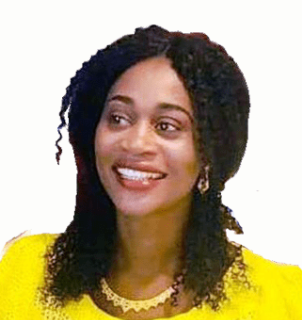
Yakumba Jaiteh, the United Democratic Party’s Deputy Senior Administrative Secretary, has criticized the government over the distribution of a D50 million fund intended to support women, accusing authorities of turning the initiative into a partisan program benefiting women affiliated with the governing National People’s Party.
Speaking on QTV, Ms. Jaiteh, a former nominated member of the National Assembly, argued that if the fund comes from public resources, it should be available to Gambian women regardless of their political affiliation.
“We are talking about Gambian women, not a particular political party,” she said, urging women to demand equal access to government programs.
Ms. Jaiteh said challenges facing women transcend partisan politics and should be addressed as national issues rather than through the lens of political affiliation.
She also defended the UDP’s record on women’s political participation, saying the party had gone beyond adopting policies and had taken concrete steps to put women forward for elected office.
As an example, she cited the party’s decision to field 16 female candidates in the last elections, which she said was more than any other political party. Although only one of those candidates was elected, Ms. Jaiteh said political parties alone could not determine the outcome, arguing that voters also have a responsibility to support women seeking public office.
She also pointed to the UDP’s nomination of a woman as its candidate for mayor of Banjul, describing it as another example of the party’s efforts to promote women into prominent political positions.
Within the UDP, Ms. Jaiteh said women and men have equal voting rights on the party’s executive and participate equally in decision-making. She added that the party has deliberately placed women in strategic roles during political campaigns.
Despite those efforts, Ms. Jaiteh said one of the major obstacles to greater female political representation is the reluctance of some educated Gambian women to enter politics. Many, she said, prefer to “play safe,” leaving the political space largely occupied by women with less formal education.
Drawing on her own experience as a former candidate in Serrekunda East, Ms. Jaiteh said that despite her record in the National Assembly, voters ultimately chose a male candidate. She said the experience demonstrated that political parties can create opportunities for women, but voters must also be willing to elect them.
Ms. Jaiteh urged Gambian women to become more politically engaged and speak for themselves on issues affecting their lives.
“We matter, and only we can make statements for ourselves,” she said.
Comments are closed.