


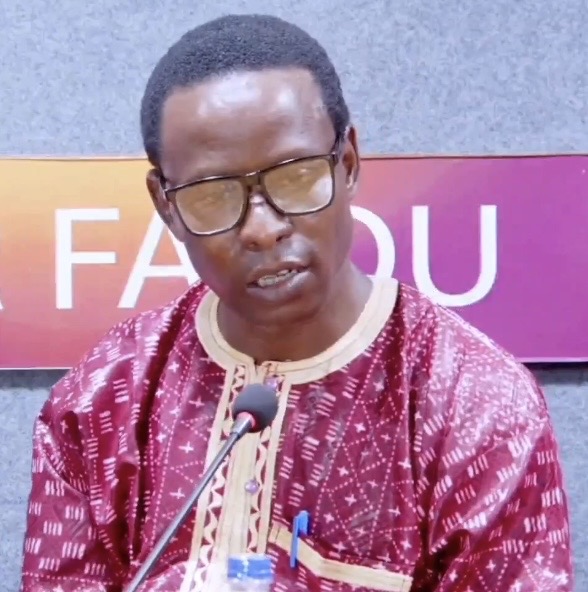
By Makutu Manneh
Yerro Mballow, chairman of Coalition 2026, has blamed competing agendas and what he described as ego-driven politics among some smaller parties and political movements for undermining efforts to forge a broad opposition coalition ahead of the December presidential election.
Speaking Tuesday on Kerr Fatou’s Politic Kaacha show, Mballow said mediators struggled to establish a common purpose among participants because some entered the negotiations with interests that did not align with the coalition’s original objective of opposition unity.
Asked why mediators were unable to resolve differences among the parties after 13 weeks of negotiations, Mballow said disagreements were compounded by competing political ambitions.
“There was a conflict, and we were trying to make a convergence, which is how to put our differences aside,” he said. “But if you look at the political movements and unregistered parties and small registered parties, they were disturbed by their egos. The bigger parties, like UDP, were following the principal aspect.”
Mballow was also asked about claims that some participants opposed the idea of the United Democratic Party (UDP), the country’s largest opposition party, taking the lead in the coalition.
He said such resistance reflected the same ego problem, arguing that personal and group interests sometimes took precedence over the broader objective of defeating the incumbent.
Mballow said he repeatedly reminded coalition participants that the UDP commands the largest support base within the opposition and urged them to acknowledge that political reality.
He warned that continued fragmentation would weaken the opposition and benefit the incumbent, describing it as a basic political principle that a divided opposition makes it easier for a sitting government to retain power.
Coalition 2026 was established to bring opposition parties and political movements together behind a single presidential candidate for the December 2026 election.
The negotiations, however, suffered a series of withdrawals, including the departure of the UDP. Ten remaining stakeholders eventually continued with the process and selected UNITE leader Talib Ahmed Bensouda as the coalition’s flagbearer.
Comments are closed.