

“It Has Been a Long Journey for Justice”: Chief Justice Hassan Jallow Bids Farewell After 54 Years of Public Service

By Seedy Jobe
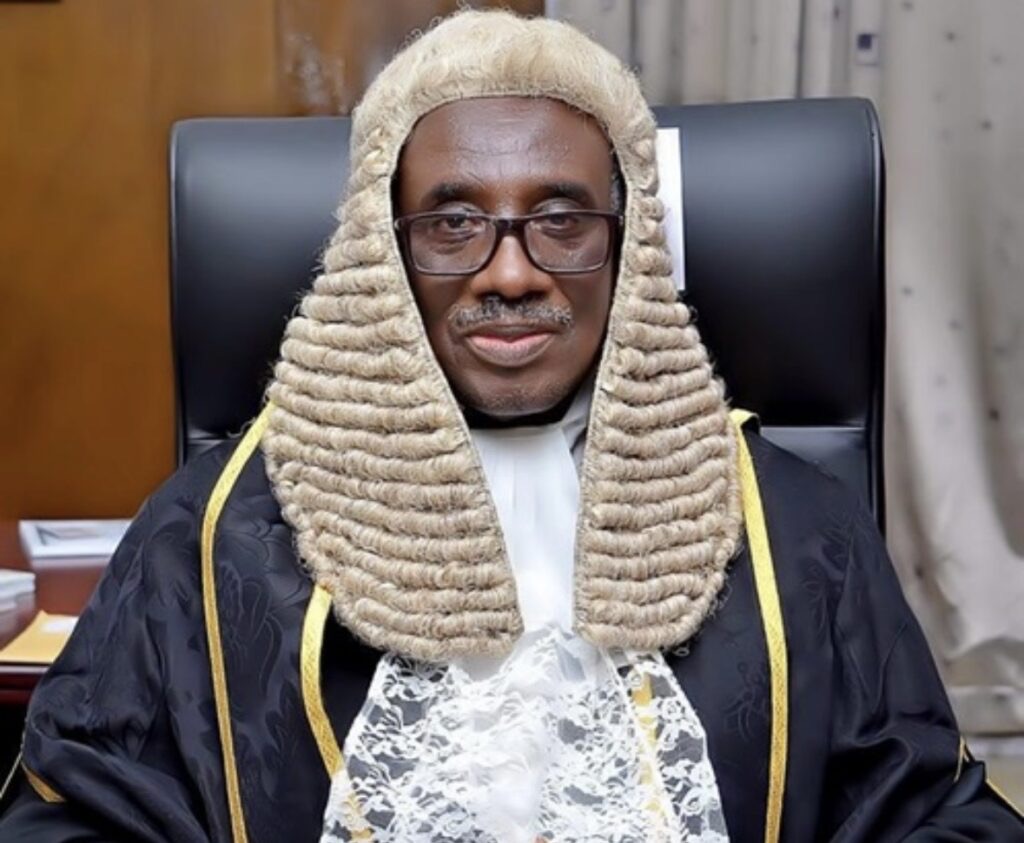
Chief Justice Hassan B. Jallow on Monday marked the close of a judicial career that has spanned more than five decades, describing his retirement as the end of “a long journey for justice” and urging Gambians to safeguard the rule of law as the country’s most enduring national legacy.
Speaking at a farewell ceremony organized by the Judiciary ahead of his retirement on Aug. 1, Justice Jallow reflected on 54 years of public service that took him from a young state counsel in The Gambia’s Ministry of Justice to the country’s highest judicial office, while also placing him at the center of some of the world’s most significant international criminal justice efforts.
The ceremony in Banjul brought together senior government officials, including the Speaker of the National Assembly, members of the Cabinet, judges, diplomats, representatives of the Gambia Bar Association, and members of his family, who gathered to honor a career that spanned all three branches of government.
“It has been a long journey for justice, but I was not alone on the way,” Justice Jallow said. “We all walked it together, and I believe we journeyed far, and we journeyed reasonably well.”
Justice Jallow, who became Chief Justice in 2017, said his retirement marks the culmination of a lifetime dedicated to public service both in The Gambia and internationally.
He recalled beginning his legal career in 1976 as a state counsel at the Ministry of Justice before serving as Attorney General and Minister of Justice, as well as an ex officio member of the National Assembly. Following years of international service, he returned home to lead the Supreme Court during a pivotal period in the country’s democratic transition.
Beyond The Gambia, Justice Jallow became internationally recognized for his work in international criminal law, serving as Chief Prosecutor of the United Nations International Criminal Tribunal for Rwanda. He also contributed to accountability initiatives related to Sierra Leone and the former Yugoslavia, and worked with institutions including the Organization of African Unity, later the African Union, the Commonwealth, and the United Nations to promote justice and good governance.
Throughout his remarks, Justice Jallow repeatedly credited others for his accomplishments, thanking God for guiding his career and expressing particular gratitude to his wife and family for what he described as their “immense and uninterrupted support.” He also acknowledged the judiciary, the legal profession, the government, and international development partners for their collaboration over the years.
Reflecting on his tenure as Chief Justice, Justice Jallow said that rebuilding public trust in the Judiciary became an immediate priority following the country’s democratic transition in 2017.
He said the courts had focused on strengthening judicial independence, expanding court infrastructure, improving human resources, and introducing technology to modernize court administration. Those reforms, he said, were intended to improve access to justice while ensuring that cases are resolved both fairly and within a reasonable time.
Justice Jallow described judging as one of the most demanding responsibilities in public service because judicial decisions are delivered openly and subjected to constant public scrutiny. Beyond deciding cases, he noted, the office of Chief Justice also carries constitutional responsibility for overseeing the administration of the courts, regulating the legal profession through the General Legal Council and supervising senior judicial personnel through the Judicial Service Commission.
He also reflected on the relationship between his professional responsibilities and his religious life, saying he viewed the administration of justice as an extension of his faith.
Justice Jallow said his responsibilities as Chief Justice and as Caliph of a Sufi Tariqa were “two sides of the same coin,” both grounded in the pursuit of truth, justice and peace.
In his closing remarks, he urged Gambians to preserve the country’s democratic institutions and protect the independence of the justice system for future generations.
“No national heritage or legacy can provide a stronger and more durable foundation for future generations than a good and working framework for the rule of law, based on an independent and efficient machinery of justice,” he said. “Without justice there is no peace, and without peace there can be no progress.”
Comments are closed.