


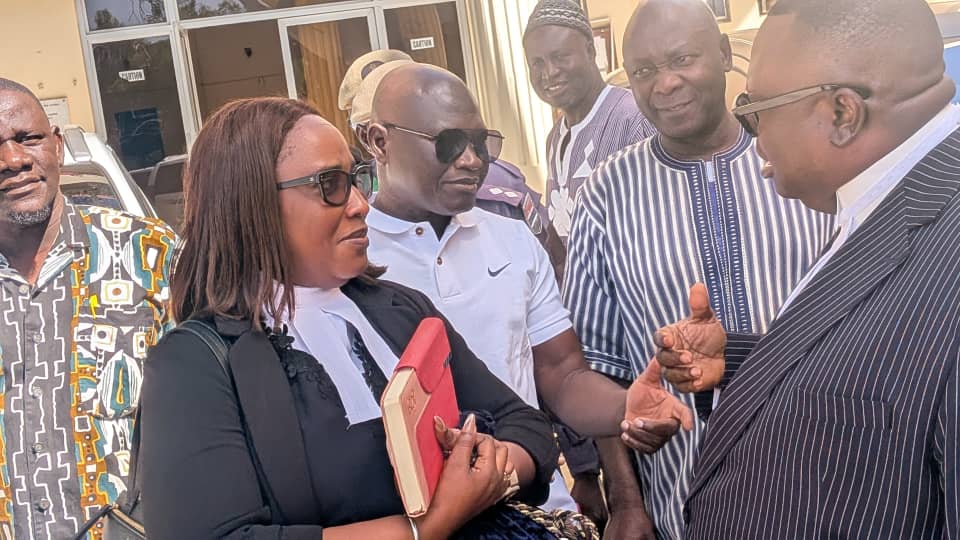
The appeal of Yankuba Badjie, former Director General of the National Intelligence Agency (NIA), has progressed in the Court of Appeal following the approval of an Amended Notice of Appeal. The amended appeal seeks to overturn his 2022 murder conviction and death sentence, handed down by Justice Kumba Sillah-Camara after a five-year trial.
Legal counsel Christopher E. Mene and Pauline Bakuri filed the amended appeal on behalf of Badjie, citing procedural and substantive errors in the original trial. During proceedings at the Court of Appeal, Mene submitted both an Affidavit in Support of Motion and the Amended Notice of Appeal. The State raised no objection, and the Court accepted the new grounds as properly filed.
The supporting affidavit, sworn by legal clerk Dawda Faye, noted that the original appeal had been filed by Badjie himself on July 20, 2022, while in prison custody. Upon reviewing the ten-volume trial record, counsel Mene determined it necessary to replace Badjie’s handwritten submissions with professionally drafted arguments, stating that the amendments were in the “overriding interest of justice.”
The Amended Notice of Appeal outlines 13 key grounds, alleging multiple errors and mismanagement of evidence during the trial:
- Hearsay Allegations: The appeal contends the trial court relied on hearsay from a key prosecution witness (PW2) who did not directly observe the alleged acts.
- Misuse of Co-Accused Statements: The defence argues that confessional statements from co-accused individuals (Exhibits I, VI, J, XI) were improperly used against Badjie, despite his non-adoption and lack of cross-examination.
- Withdrawn Exhibits: The appeal asserts that the court relied on a confessional statement (Exhibit XI) previously withdrawn by the prosecution.
- Conflict of Interest: The prosecution team included lawyers affiliated with the United Democratic Party (UDP), the same party as the victims, raising concerns over impartiality.
- Procedural Irregularities: The defence claims the prosecution introduced new witnesses throughout the trial, allegedly “making up its case.”
- Lack of Representation: Badjie was forced to represent himself at one stage after his legal team withdrew, a situation the appeal describes as inherently unfair.
- Judicial Recusal: Justice Sillah-Camara allegedly demonstrated bias by refusing to recuse herself despite previous appellate interventions.
- Legal Status and Official Immunity: The appeal argues that Badjie’s conviction is invalid due to his official role at the time of the alleged offenses.
- Official Capacity: It contends that actions undertaken by Badjie in his NIA role were legally acts of the agency.
- Improper Procedure: The prosecution allegedly failed to follow statutory procedures required for NIA personnel.
- Noncompliance with NIA Act: The appeal references Sections 16 and 17 of the NIA Act, asserting that proper procedures for prosecuting NIA staff were not observed.
- Vicarious Liability: The defence maintains that criminal liability cannot be inferred from Badjie’s rank as Director General, as “there is no vicarious liability in criminal law.”
- Unreasonable Verdict: The appeal concludes that the High Court’s verdict was “unreasonable and perverse” and lacked evidential support.
The defence is seeking a full reversal of the High Court judgment, requesting the Court of Appeal to acquit Badjie of all charges, including conspiracy to murder, forgery, and abduction.
Counsel Christopher E. Mene filed the motion on February 16, 2026, formally seeking leave to rely on the additional grounds to replace the original self-filed appeal submitted by Badjie during his custody.
Comments are closed.