


By Makutu Manneh
A government-appointed task force has recommended that the National Water and Electricity Company be split into two independent entities, outlining a sweeping restructuring plan aimed at improving efficiency in the country’s water and electricity services.
The proposal, submitted to the Minister of Petroleum, Energy, and Mines, Nani Juwara, calls for the dissolution of the existing utility and the creation of two single-purpose companies: the Gambia National Electricity Company and the Gambia National Water Company.
In a statement, the ministry said the report marked a critical step toward reform, adding that the government would now begin the process of implementing its recommendations.
“The report has been submitted, and now we will move on to other necessary steps taken by the government to see to the successful implementation of this report,” the ministry said.
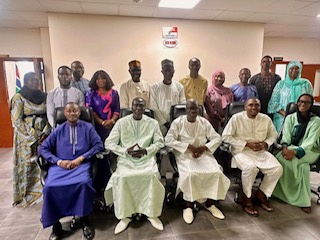
Presenting the findings, the task force chairman, Sulayman Samba, described the proposal as a comprehensive framework for separating the utility’s dual mandate. He said the plan integrates governance, financial, and strategic reforms designed to establish two autonomous institutions capable of operating more effectively.
“We believe that it is an adequate response to your instruction in executing the cabinet directive, not only to separate the dual function of NAWEC but to set each entity on a viable path of sustained performance improvement,” Mr. Samba said.
Under the proposal, the electricity company would largely maintain its existing operational structure, while the water company would undergo more significant institutional changes, including the creation of new directorates overseeing technical operations, customer service, human resources and administration, finance, and corporate strategy.
The report also addresses how shared services between the two entities would be managed during the transition. In the short term, these services would be distributed based on principles of equity, including a concessionary power supply arrangement between the companies. Over time, however, the entities would fully separate, with options for outsourcing and potential privatization under consideration.
Mr. Samba said the proposed names of the two companies were chosen to reflect clarity of purpose and national identity, as the government seeks to modernize a utility long burdened by operational and financial challenges.
Comments are closed.