

MoBSE Begins Nationwide Training for Data Collectors Ahead of 2025–2026 School Census

By Seedy Jobe
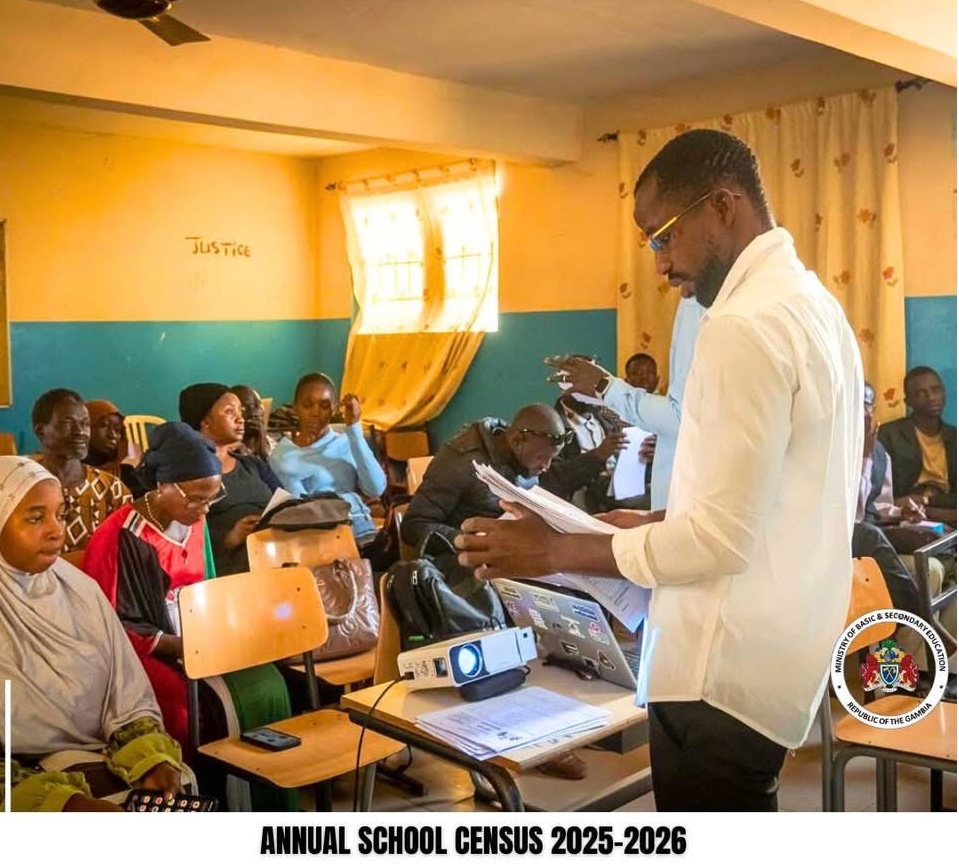
The Ministry of Basic and Secondary Education has begun a nationwide training program for school data collectors in preparation for the 2025–2026 National Annual School Census, an exercise that officials say is critical to improving the accuracy of education data used for planning and policy decisions.
The training, coordinated by the ministry’s Planning, Policy Analysis, Research, and Budgeting Directorate, is designed to strengthen the capacity of those responsible for gathering and reporting school data across the country.
Speaking at the training center in Old Yundum, Fatoumatta Jallow, an education officer at the Education Management Information System (EMIS) and Planning Directorate, emphasized the importance of reliable data in shaping national education policy.
“Data remains the foundation for effective planning and policy formulation in the education sector,” Ms. Jallow said, urging participants to ensure accuracy and integrity in the information they collect.
The program, supported by the World Bank through the RISE Project, is bringing together EMIS and planning officers from the ministry, heads of public, private, and madrassa schools, as well as cluster monitors who supervise groups of schools.
Participants are being trained to use the DHIS2 education platform, a digital system intended to streamline the collection and management of school data and improve its reliability.
According to the ministry, the Annual School Census is a key tool for education planning. The data gathered is used to estimate the need for instructional materials, evaluate infrastructure requirements, and guide the equitable deployment of teachers nationwide.
Officials say the training is part of a broader effort to strengthen school-based data management and ensure that the upcoming census provides an accurate picture of the country’s education system. Similar sessions are being held at several training centers across the country as the ministry continues its transition from paper-based reporting to fully digital data systems, particularly in public schools.
Comments are closed.