

High Court Denies Bail to Murder Suspect, Orders Prison to Grant Counsel Access

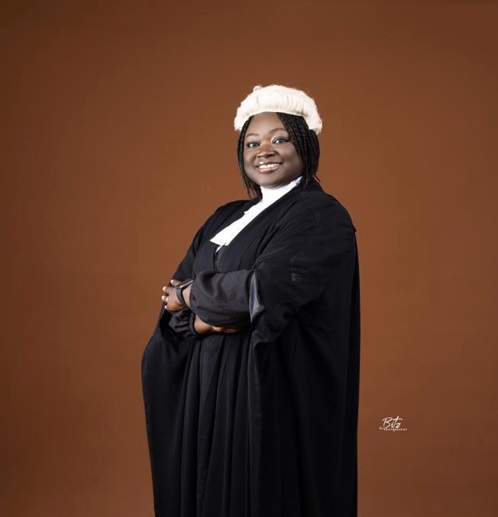
The High Court in Banjul, presided over by Justice Sidi K. Jobarteh, has refused a bail application filed on behalf of murder suspect Sanna Manjang, who is currently held on a holding charge. The court, however, issued a directive to the Director General of Prisons to grant Manjang’s lawyer immediate access to him.
When the case was called, Counsel S.K. Jobe represented the accused, while the State was represented by A.M. Yusuf, assisted by M. Jammeh and A. Badjie.
Counsel Jobe applied for bail pending the filing of a Bill of Indictment, arguing that his client is presumed innocent under the Constitution and is entitled to bail—even on a murder charge—under the provisions of the new Crime Offences Act.
“What we are asking from the court is the respect for the accused person, who is presumed innocent until proven guilty, and those rights have to be respected before this court,” Jobe submitted. He argued that until the state files a formal indictment, Manjang is legally entitled to bail.
Jobe also raised concerns regarding his inability—and that of the accused’s family—to access Manjang at Mile 2 Prison. He told the court they were informed that authorization from the National Security Adviser was required before any visit could take place.
“The family and counsel have made an effort to see him to prepare his defence, but, however, we are told on the basis that we need authority from the National Security Adviser. I don’t know why,” he stated, urging the court to intervene.
In response, the Director of Public Prosecutions (DPP) argued that the murder charge filed at the Magistrates’ Court renders the offence non-bailable at this stage, notwithstanding the presumption of innocence.
“Yes, he’s presumed innocent, but the offence is not bailable, and the accused can be put in custody under the circumstances,” the DPP stated. He further submitted that the suspect had been approached by investigators but chose not to speak or indicate whether he required a lawyer.
Counsel Jobe countered that the right to remain silent cannot be used as grounds for “victimisation.”
In her ruling, Justice Jobarteh noted that the case was transferred from the Magistrates’ Court, where the accused had been remanded pursuant to Section 72(a) and (b) of the Criminal Procedure Act. She recalled that High Court Practice Direction No. 1 of 2022 mandates that such matters be listed for mention within seven days of assignment—a requirement the court met.
While acknowledging that the court could not act on a holding charge, Justice Jobarteh emphasized that she could not “shut [her] eyes” to the capital offence pending before the lower court. She added that although the 2025 Criminal Procedure Act permits bail even in capital cases, defence counsel had not established the conditions necessary for its grant.
Justice Jobarteh therefore denied the bail application, ruling that the matter had been mentioned within a reasonable timeframe, making bail unnecessary at this stage.
She ordered the State to file a Bill of Indictment on or before 12 January 2026.
Addressing the issue of access, Justice Jobarteh issued a clear directive to prison authorities:
“Before then, the Director General of Prisons is, by a copy of this order, directed to allow Counsel for the accused, S.K. Jobe, access to the accused pending his arraignment before this court.”
The case has been adjourned to Thursday, 15 January 2026, at 10:00 a.m. for plea taking.