

High Court Clears Former Protocol Chief in Diplomatic Passport Case, Cites Prosecution’s Failure to Prove Fraud

The High Court has acquitted former Director General of Protocol at the Ministry of Foreign Affairs, Baboucarr M.S. Jobarteh, of all criminal charges linked to the alleged fraudulent issuance of diplomatic passports.
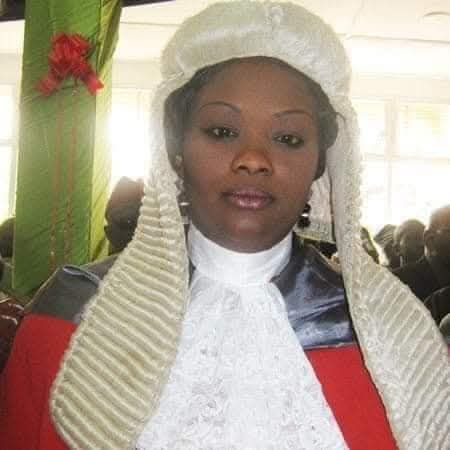
Delivering judgment, Justice Z.N. Mboob ruled that the prosecution “woefully failed” to present cogent and credible evidence sufficient to meet the high standard of proof required in criminal proceedings.
Jobarteh faced two counts under the Criminal Code: making documents without lawful authority and obtaining goods by false pretences.
Prosecutors alleged that he approved diplomatic passports for Ndey Njie and Isatou Manneh, despite their lack of diplomatic status. He was further accused of collecting D175,000 each from Sulayman Keita and Abdul Wahab Jabbie under the pretext of facilitating diplomatic passports.
During the trial, Njie and Manneh testified that they were approached by an agent, Ousman Drammeh, who allegedly promised them American visas and diplomatic passports to ease travel to the United States. Njie said she paid D350,000, while Manneh paid D250,000 for the process.
Both women told the court they were escorted to the Ministry of Foreign Affairs and the Immigration Department to complete documentation and later received diplomatic passports, despite not being diplomats. Manneh, who was seven months pregnant at the time, testified that she later sought a refund upon realising the passports did not guarantee entry into the United States as allegedly promised.
The prosecution also relied on evidence from a police panel that investigated the unlawful possession of diplomatic passports. Inspector Hassan Baldeh testified that 41 individuals were found in possession of diplomatic passports without meeting the required criteria, with approval forms allegedly bearing Jobarteh’s signature.
Former Permanent Secretary Njogou Saer Bah outlined the ministry’s approval hierarchy, noting that while the President holds discretionary authority to direct issuance of diplomatic passports to any individual, standard applications must satisfy established criteria. He testified that some approvals, including those issued to students with no diplomatic ties, were inconsistent with policy guidelines.
Taking the stand in his defence, Jobarteh denied any fraudulent intent or receipt of funds. He maintained that, as Director General of Protocol, he possessed the legal authority to approve diplomatic passports and often acted on directives from the Office of the President.
He told the court that following the 2017 change of government, political parties submitted lists of supporters for diplomatic passports. He specifically recalled Njie’s name appearing on a list delivered by the President’s Chief Driver, which he processed in the belief that it constituted an official presidential directive.
Jobarteh argued that presidential instructions were sometimes conveyed verbally or informally through trusted staff, and he acted within the scope of his official duties.
In a detailed ruling, Justice Mboob found no evidence that Jobarteh forged or fraudulently signed documents. Rather, the court held that he signed in his official capacity — an authority he lawfully possessed.
The judge also highlighted significant evidentiary gaps, including the failure to call key witnesses such as Abdul Wahab Jabbie. Additionally, Sulayman Keita testified that he had never dealt directly with Jobarteh or given him any money, further weakening the prosecution’s case.
While the court acknowledged concerns about the apparent bypassing of passport criteria and possible politicisation of the process, Justice Mboob held that such issues did not amount to proof of the specific criminal offences charged.
She was critical of the State Law Office, citing a lack of “consistency and procedural rigour,” repeated amendments to the charges, and the withdrawal of certain accused persons mid-trial — factors she said undermined the prosecution’s case.
Although the evidence suggested potential abuse of office and systemic weaknesses in the management of diplomatic documents, the court ruled that fraud and obtaining goods by false pretences were not proven beyond reasonable doubt.
“The Accused person Baboucarr Jobarteh is accordingly discharged and acquitted on all charges. This is my judgment,” Justice Mboob declared.
In concluding her judgment, Justice Mboob recommended that the Ministry of Foreign Affairs establish more robust scrutiny mechanisms to safeguard the integrity of diplomatic passports and prevent future institutional lapses.
The ruling brings to a close a high-profile case that cast a spotlight on the handling of sensitive state documents and raised broader questions about governance and oversight within the diplomatic system.
Comments are closed.