

Defense Rests in Gambia Police Killing Trial, Urging Acquittal Over ‘Misconception of Law’

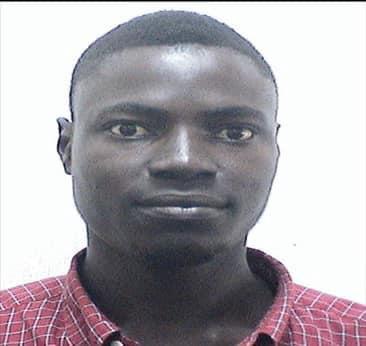
Counsel Lamin J. Darboe, representing Ousainou Bojang, has filed a final reply on points of law, urging the High Court to acquit his client in the trial over the fatal shooting of two police officers at the Sukuta–Jabang traffic lights in September 2023.
The submission, which marks the defense’s closing legal argument, contends that the prosecution’s case rests on what Mr. Darboe describes as a “deliberate mischaracterisation” of the evidence and a fundamental misunderstanding of the law governing confessions and alibis.
Mr. Darboe does not dispute that the killings occurred. Instead, he argues that the state has failed to answer what he called the “central question” in a murder trial: whether the accused was the person who committed the act. Citing Batch Samba Faye v. The State (2014–2015), he maintained that the burden lies on the prosecution to prove beyond a reasonable doubt that Mr. Bojang caused the deaths.
According to the filing, the prosecution has not established a clear evidentiary link—or nexus—between Mr. Bojang and the shootings. Mr. Darboe argued that no credible circumstances were presented to show that his client was the gunman, and he invoked Bojang v. The State (1997–2001) to underscore the stringent legal standard required for visual identification evidence.
A significant portion of the defense’s argument challenges the admissibility of statements attributed to Mr. Bojang. Citing Section 31(1) of the Evidence Act, which defines a confession as a voluntary admission, Mr. Darboe argued that the prosecution had “misconceived” the law by relying on statements he said were neither voluntary nor lawfully obtained.
He further alleged that investigators failed to comply with required legal safeguards during Mr. Bojang’s detention. Under the precedent set in Mamadou Jallow v. Commissioner of Police, he argued, any involuntary or improperly obtained statement cannot support a conviction.
The defense also rejected the prosecution’s assertion that Mr. Bojang’s alibi was introduced late in the proceedings. Mr. Darboe told the court that the alibi was raised at the time of arrest, when Mr. Bojang informed Commissioner Momodou Sowe, a prosecution witness, of his whereabouts.
According to the filing, Mr. Bojang also offered his mobile phone to investigators to verify his communications with a defense witness, Kathleen McGee, who testified to his presence elsewhere at the time of the shooting. Mr. Darboe argued that the State failed to investigate this lead, which he characterized as a critical omission.
Relying on Sampson Idowu v. The State (2013), the defense maintained that once an alibi is raised, the burden shifts to the prosecution to disprove it. Mr. Darboe said the testimony of six defense witnesses placing Mr. Bojang in Brufut at the relevant time remained unchallenged.
He also pointed to the absence of forensic evidence — including DNA, fingerprints, or ballistic links — tying Mr. Bojang to the crime. Citing Miller v. Minister of Pensions (1947), he emphasized that the burden of proof rests solely with the State and that any reasonable doubt must be resolved in favor of the accused.
In support, Mr. Darboe referenced The State v. Yankuba Touray (2021), arguing that a conviction cannot be sustained on weak circumstantial evidence without forensic corroboration.
In closing, Mr. Darboe described the prosecution’s final submissions as reflecting a “clear misconception of the applicable law” and urged the court to acquit Mr. Bojang on all counts.
With legal arguments now concluded, the case has been adjourned for judgment. Justice Jaiteh is expected to deliver a verdict on March 30, 2026, determining whether Mr. Bojang and his co-accused will be convicted or acquitted.
Comments are closed.