

Imam Ba Kawsu Fofana Says Opposition Is Not Rebellion, Urges Clerics to Understand the Difference

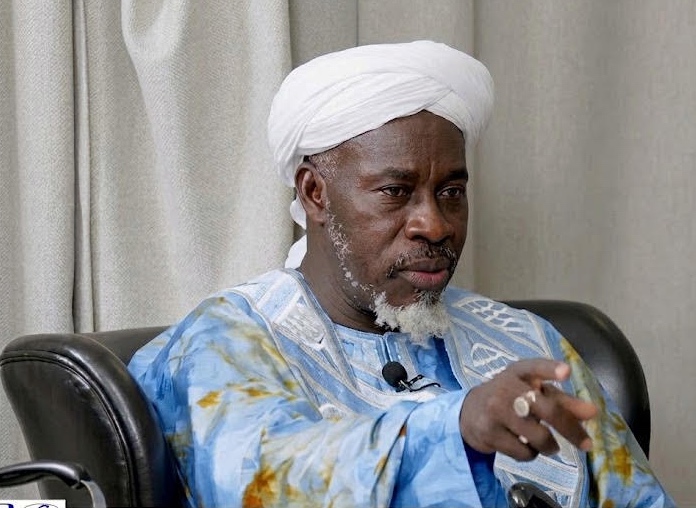
By Seedy Jobe
Prominent Islamic cleric Imam Ba Kawsu Fofana has sought to distinguish political opposition from rebellion, saying Islam does not prohibit citizens from voting, peacefully criticizing their government, or participating in lawful demonstrations.
Speaking during an interview on Kerr Fatou’s Grand Bantaba program, Imam Fofana said being in opposition should not be equated with rebelling against a sitting president, a distinction he said both government officials and religious scholars need to understand.
His remarks came in response to a question about whether opposing a president is religiously wrong and whether voting against an incumbent amounts to defying the country’s leader—a belief he said has discouraged some people from voting.
Imam Fofana rejected that interpretation, arguing that political opposition conducted peacefully and within the law is fundamentally different from armed rebellion, which he said Islam forbids.
He said societies and political systems change across generations, while the Quran has remained unchanged since the time of the Prophet Muhammad and continues to provide guidance for people across countries, generations, and ethnic groups.
Discussing elections, Imam Fofana said many people still do not fully appreciate the significance of voting. Historically, he said, political power was often acquired through armed conflict, with the victor assuming leadership. He added that leadership was also frequently viewed through ethnic or tribal considerations.
Under modern democratic systems, he said, leadership is instead determined by the choice of the majority through elections.
Imam Fofana said voting is consistent with peaceful political participation and national unity. He noted that electoral laws establish who is eligible to vote, including age and other legal requirements, and said citizens should recognize the importance of participating in choosing their leaders.
“Whoever God chooses, follow him,” he said.
Imam Fofana stressed that opposition and rebellion should not be treated as interchangeable concepts.
A rebel, he said, is someone who takes up arms against a sitting government. Such armed confrontation, he argued, is prohibited in Islam.
Political opposition within a constitutional system is different, he said. Governments themselves establish laws and institutions that allow individuals and political parties to contest elections and seek the presidency. By creating such a system, he said, the state recognizes the right of citizens to disagree with those in power, identify problems, and seek political change through lawful means.
That right, he said, is protected through the Constitution, legislation, and the country’s democratic institutions.
Imam Fofana made a similar distinction regarding demonstrations, saying citizens may protest government actions provided they do so peacefully.
People with grievances, he said, should be able to express them verbally or in writing without resorting to violence, damaging private property, or vandalizing government property.
He said the role of the police and the Police Intervention Unit during peaceful demonstrations should be to maintain order, prevent clashes, and protect property rather than disperse protesters with tear gas when they are expressing themselves peacefully.
Imam Fofana urged religious scholars to clearly distinguish between armed rebellion and lawful political opposition.
“Fighting is not good, but being in opposition is not bad,” he said, arguing that opposition is recognized under the country’s laws and political system.
He pointed to The Gambia’s own political history, saying the current government itself came to power through opposition politics. He contrasted the present political system with the rule of former President Yahya Jammeh, which he said placed greater restrictions on political rights.
Imam Fofana reiterated that Islam prohibits attempts to remove a sitting government through armed struggle but does not prohibit voting or peaceful political participation.
He urged Gambians to approach the choice of their leaders conscientiously and peacefully and to avoid political conduct that could lead to violence or actions prohibited by their faith.
Comments are closed.