

UDP Organizing Secretary Says Coalition Momentum Is Reshaping 2026 Race as Voters Seek Change

By Seedy Jobe
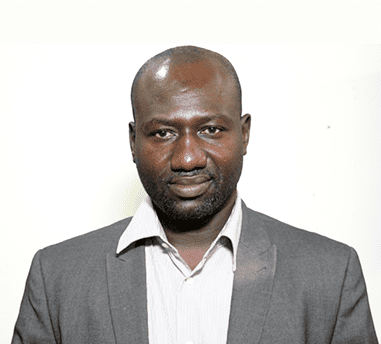
The national organizing secretary of the United Democratic Party, Sulayman Saho, has said growing dissatisfaction with President Adama Barrow’s government and a series of opposition realignments are reshaping the political landscape ahead of The Gambia’s 2026 presidential election.
Speaking in an interview on Eye Africa TV’s Verify program, Mr. Saho pointed to a recent survey in which 41 percent of respondents said they believed a UDP-led coalition could win the election, compared with 31 percent who said it could not. Another 20 percent were undecided.
Mr. Saho said the findings reflected what he described as a broader desire for political change, arguing that frustration with the Barrow administration was increasingly evident across the country.
“Even if you do your own movement around, you can see the dissatisfaction in the face of the people,” he said. “And you can see the Gambians are yearning for a change.”
Mr. Saho, who represents Central Badibou in the National Assembly, said the shifting alliances and coalition negotiations were typical of the period leading up to a presidential election. But he argued that the intensity of the current political maneuvering suggested growing pressure on the incumbent.
He cited a succession of opposition initiatives, including the APEX alliance and another round of coalition discussions led by Malick Camara of the Alliance for Democratic Development, or ADD, which later fractured. Other political groupings involving Lamin J. Darboe, Talib Ahmed Bensouda and Essa Faal have also emerged, he said, while an earlier alliance involving Kebba Madi Ceesay, the Gambia Action Party for National Unity, and other political figures appears to have lost momentum.
Against that backdrop, Mr. Saho described the recent decision by Papa Faal and the People’s Progressive Party, led by Madikay Faal, to join the UDP-led alliance as a “big win.”
He said political personalities, regional loyalties, and ethnic considerations remain influential in Gambian elections and argued that the new alliance partners could broaden the UDP’s appeal beyond its traditional support base.
Mr. Saho also highlighted the involvement of younger political figures, including Saikou Sawo of Golden Era and Neneh Cheyassin, whom he credited with helping the alliance reach younger voters who may not have previously identified with the UDP.
Both attended a recent UDP fundraiser in Serrekunda that drew a large crowd and took on the atmosphere of a political rally. Mr. Saho characterized the gathering as evidence of growing grassroots enthusiasm and volunteerism around the opposition alliance.
He pointed to Janjanbureh as another example of what he described as changing political sentiment. Despite the presence there of senior local government officials, including the governor and chief, Mr. Saho said a recent UDP rally attracted people who had previously supported Mr. Barrow’s National People’s Party.
Some former NPP supporters, he claimed, privately told opposition organizers that they no longer intended to vote for the president and would instead support the opposition alliance. Those claims could not be independently verified.
Mr. Saho said the UDP’s longstanding organizational network, which he described as extending into villages and communities across the country, would provide the foundation for its campaign. The immediate task, he said, was to combine that structure with the networks of its alliance partners while making a concerted appeal to voters who remain undecided.
On policy, Mr. Saho said the opposition would continue emphasizing corruption, good governance, youth employment and assistance for vulnerable people and people with disabilities.
He sharply criticized the Barrow administration’s record on corruption, arguing that concerns about governance cut across social and economic lines. He said those concerns could prove particularly important among voters who have yet to decide whom to support.
For Mr. Saho, the emerging alliances and recent political activity are signs that voters who once doubted whether the opposition could defeat Mr. Barrow are increasingly considering that possibility.
The ultimate test, however, will be whether the UDP and its partners can translate that dissatisfaction and coalition-building into votes in 2026.
Comments are closed.