

They Prosecuted Our Crimes Before We Could. Justice Is Finally Coming Home And It Cannot Arrive Alone

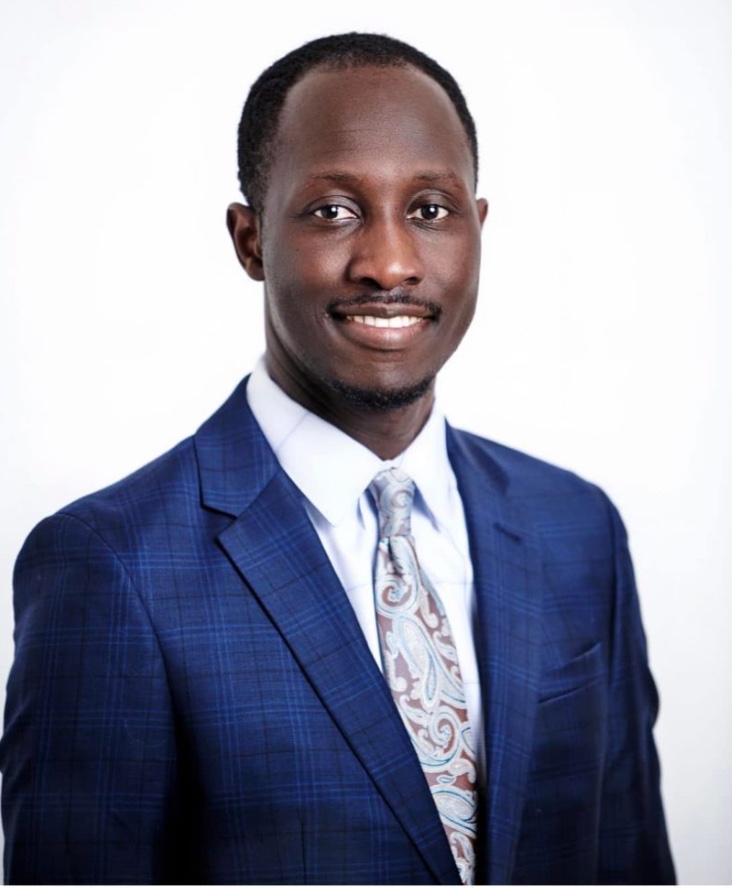
Hon. Sarjo Barrow, Esq.
By Hon. Sarjo Barrow
The views expressed are the author’s and do not necessarily reflect those of the United States Department of Justice or the United States.
Today, during a press conference, the Honorable Attorney General, Dawda Jallow, announced that The Gambia has appointed Mr. Martin Hackett, a British Barrister, as Special Prosecutor of The Gambia. This is a moment to pause and reflect. For those who have watched the slow progress of accountability since the Truth, Reconciliation and Reparations Commission (TRRC) concluded its work, this is more than just an administrative appointment. It signals, perhaps more than anything else so far, that the government of The Gambia is serious about confronting its darkest chapter.
Therefore, the Attorney General’s office and the post-TRRC office led by Ida Persson deserve genuine commendation. Political will is one of the rarest commodities in transitional justice or in addressing human rights violations by any government. It would not be unusual if the reports from truth commissions gather dust and their recommendations are filed away under “aspirational.”
According to the briefing, Mr. Hackett’s résumé shows that he brings not only professional credentials but also the institutional knowledge necessary for complex atrocity prosecutions. These are not ordinary criminal cases; they require mastery of international humanitarian law, the ability to handle large volumes of evidentiary records, and the temperament to pursue accountability over years, not just months.
What this means for the future is significant.
The TRRC identified specific individuals, crimes, and patterns of state-sponsored violence. A properly functioning Special Prosecutor’s office can turn those findings from mere history into legal jeopardy. It sends a message to survivors that their testimonies were not just therapeutic but also evidentiary. It signals to the international community that The Gambia intends to be a rule-of-law state in practice, not just in its constitution.
However, there is an uncomfortable irony in this moment, one that must be acknowledged openly, without diminishing the achievement. The United States and Switzerland did not need to look outside their borders for prosecutors when Gambian victims sought justice on their own soil. American federal prosecutors and Swiss magistrates used their own domestic laws, built their own cases, and obtained convictions for crimes against Gambians. They did so with the lawyers they had, within their systems. The Gambia, whose own citizens suffered and bled, has had to take a different route. To be clear, this is not a criticism of Mr. Hackett’s appointment; it is an indictment of a structural deficit that predates this current government by decades.
The Ministry of Justice requires support, sustained and serious support. For a government institution that is more than 60 years old, the inability to assemble a prosecution team entirely from within its own ranks for the most significant cases in the nation’s history calls for honest reflection. Why?
Part of the answer lies in retention. The Gambian Bar has produced capable lawyers, and this is not a talent problem. Yet, the exodus is real and ongoing. Many Gambian lawyers and jurists have left the Ministry of Justice and the bench to serve in international courts like the Special Court for Sierra Leone, the International Criminal Tribunal for the former Yugoslavia, the Rwanda Tribunal, and other international mechanisms. They left not out of a lack of patriotism, but because those institutions offered independence, competitive compensation, and an environment where serious lawyers could do serious work. When the country’s most experienced legal minds choose to go to The Hague rather than stay in Banjul, that is a policy failure, not a personal one.
This creates national security implications that are rarely discussed openly. A justice system staffed by underpaid, under-resourced, and under-independent lawyers is vulnerable to pressure, prone to delays, and incapable of projecting state authority at its most basic level. Today, during the government’s 2025 scorecard presentation, this issue was starkly clear. The conviction rate alone looks respectable and deserves credit. But the indictment figures tell a quieter, more troubling story.
For a country of two million, only 30 indictments were filed in all of 2025. I would genuinely welcome the conclusion that serious crime is rare or that effective policing deters crime, but those explanations seem unlikely and strain credibility. What the numbers more plausibly suggest, and the author highlights as a question worth serious investigation rather than a settled indictment, is a possible breakdown somewhere in the process between police investigation and prosecution. If this pattern continues, it would indicate crimes being investigated but not charged, evidence gathered but not turned into a case, and victims who provided statements but saw no follow-up. Resource limitations at every stage of that process would only worsen the issue. Whether that is the full explanation, or even the correct one, are questions better answered by the Attorney General and the Inspector General of Police. However, the numbers as presented invite this inquiry, and a government that has demonstrated the courage to appoint a Special Prosecutor should have little trouble also commissioning the honest audit this question demands.
The gap becomes even more striking when set against comparable jurisdictions. Even by the standards of small counties in the United States or compared across West Africa, this level of indictment volume raises serious questions. The problem is not the courts themselves; it is what fails to reach them. When police investigations do not lead to prosecutions, the fault lies along the seam between law enforcement and prosecution. That seam in The Gambia appears strained. A well-structured Special Prosecutor’s office can serve as a model for coordinated, evidence-based prosecution, setting a higher standard for institutions to follow long after international mandates end.
There is, however, a constitutional question quietly embedded in this appointment, one that deserves to be asked openly.
Under Gambian law, the right to counsel is fundamental. For those accused of capital offenses, the state must provide competent legal representation if they are indigent or cannot afford it, not merely nominal legal aid. By appointing a foreign barrister of Mr. Hackett’s caliber to lead the prosecution, the government implicitly acknowledges that its own legal capacity may be insufficient for such complex cases.
While well-intentioned, this acknowledgment raises questions. If the government acknowledges that its lawyers aren’t equipped to prosecute these serious crimes, what about those defending the accused? The National Agency for Legal Aid (NALA) will be tasked with providing counsel for those who cannot afford private lawyers. Will NALA have similarly qualified lawyers? If not, convictions could come into question, especially in capital or atrocity cases, where constitutional challenges and appeals might undo years of effort and resources.
This is not a hypothetical concern. It has been experienced in international courts and hybrid tribunals worldwide. The right to a fair trial is not merely procedural; it is essential for legitimate justice. A verdict that does not survive constitutional scrutiny is not justice. It is a verdict waiting to be overturned. That is why investing in the Ministry of Justice is more than an administrative task; it is essential for lasting accountability. Strong convictions, supported by competent prosecution and defense, uphold the rule of law and help close this dark chapter.
Despite these challenges, there are reasons to be optimistic, especially about one remarkable development.
The Attorney General’s decision to let young Gambian prosecutors deliver closing arguments at an international court in the Myanmar case was extraordinary. Those young lawyers represented The Gambia before a global forum and acquitted themselves well. Their performance should serve as a blueprint, not an exception.
The Special Prosecutor’s office should be intentionally designed as a training institution, not just an operational one. Every Gambian lawyer working there under Mr. Hackett’s leadership should learn, document, and build institutional strength that remains in The Gambia once the international mandate ends. The skills developed in atrocity prosecution are versatile, capable of handling complex financial crimes, organized crime, and constitutional cases. The investment pays off.
The appointment of a Special Prosecutor marks the start of accountability, not its end. Whether it becomes a lasting transformation depends on choices made now: resources, independence, and the future shape of the Ministry of Justice. The political will has been demonstrated. The appointment has been made. Now the real work begins, building an institution that ensures The Gambia will never need to seek justice abroad again.
Hon. Sarjo Barrow, Esq.
Comments are closed.