


By Makutu Manneh
Political analyst Essa Njie has argued that public opposition to a United Democratic Party (UDP)–led government is a significant factor driving support for President Adama Barrow, even among voters who believe the president is not the best solution for the country.
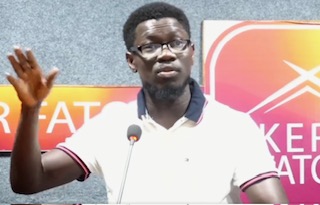
Speaking in an interview on Kerr Fatou, Njie said that in discussions with voters following the defeat of former President Yahya Jammeh and the country’s only subsequent presidential election in 2021, many expressed dissatisfaction with President Barrow but nonetheless preferred him to a UDP government.
“Let us just hit the nail on the head. Many would say, If we do not vote for President Barrow and we vote for others, then UDP would win,” he stated.
He noted that this line of thinking persists despite voters acknowledging shortcomings in the current administration. According to Njie, such voters believe that maintaining President Barrow in office is a lesser risk than allowing the UDP to assume power.
However, he challenged this logic, arguing that voters who oppose both the UDP and the incumbent president have alternative options. Njie pointed to candidates such as Essa Faal, Halifa Sallah, and Mama Kandeh, suggesting that support for these figures could lead to a change in government.
Njie described the prevailing perception as “very unfair” to the UDP, stressing that Gambian politics should move beyond entrenched fears and assumptions. He added that if undecided voters were to rally behind alternative candidates, the outcome could prevent both the UDP and the incumbent from winning.
He also warned that new political actors could face similar treatment to that experienced by opposition candidates in 2021. “But what they punished Essa, Halifa, Mama Kandeh and Abdoulie for in 2021 is the same thing they will use to punish people like Talib and all these newcomers.”
Njie further argued that dissatisfaction with governance should not be overlooked simply because of historical grievances against the UDP. “When the government is not doing it right, we should not sit and say this is what UDP did in 2017, so we will leave Barrow there. That is not the solution,” he said.
He acknowledged that some Gambians believe the UDP was effectively tested during the coalition government period, when it held significant influence, including a parliamentary majority. According to Njie, some voters felt expectations for legal and institutional reforms were not met during that time, citing issues such as the controversial donation of vehicles to parliamentarians by an anonymous donor in the early days of the coalition.
Njie said there are also broader concerns among sections of the electorate about the UDP’s internal culture, including perceptions of intolerance and aggressive attacks on political opponents. “Some say UDP attacks people a lot, like the level of intolerance of some individuals in the party. So people distance themselves from them because of that.”
Additional factors, he noted, include allegations of tribalism and concerns about the age of UDP flag bearer Ousainu Darboe. However, Njie urged voters to base their political choices on more substantive considerations, such as party programs and leadership capacity. “But some don’t have substantial evidence. If you feel UDP is not the solution, you have other opinions.”